

Skip to content
Photo of a woman signing a contract

The Handshake That Cost Millions: How the Lack of Written Contracts Continues to Damage the Adult Industry

The adult entertainment industry has always been defined by its ability to evolve. It embraced online distribution before much of mainstream entertainment, pioneered subscription-based business models long before they became commonplace, and continues to push technological innovation in areas ranging from streaming to artificial intelligence. Featured In The August 2026 Edition Of XBIZ World Building Business Relationships with an Agreement, not a Handshake. While the industry has become increasingly sophisticated in the products it creates and the technology it uses, one area of the business has remained surprisingly informal: too many business relationships are still built on handshake deals, verbal…

Read more
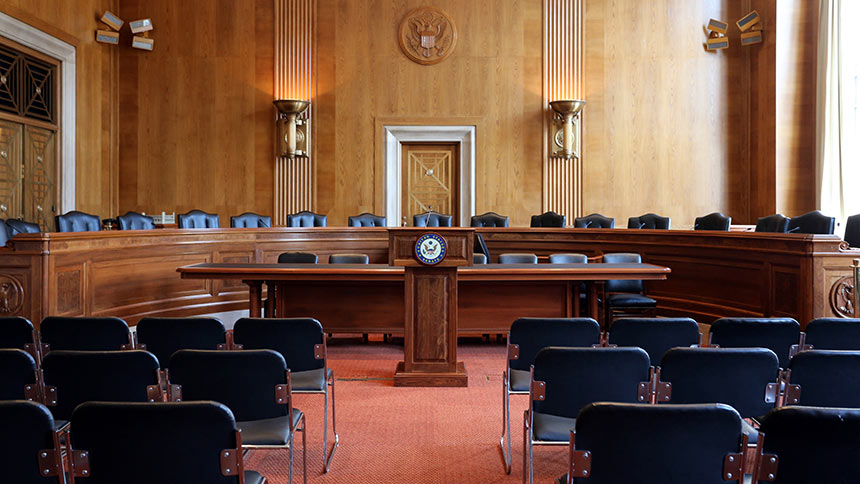
Photo of a United States Senate committee hearing room in Washington, DC on July 18, 2017

Federal SCREEN Act Scheduled for Senate Markup

What Adult Platforms Need to Know The U.S. Senate Committee on Commerce, Science, and Transportation will consider the Shielding Children’s Retinas from Egregious Exposure on the Net Act, commonly known as the SCREEN Act, during an executive session scheduled for August 5, 2026. The bill, S. 737, would establish a federal age-verification mandate for online platforms that regularly make adult content available for profit. The SCREEN Act is only one of several online-safety bills on the committee’s agenda, but it is the proposal with the most direct and immediate significance for the adult entertainment industry. Committee approval would send the…

Read more
AI-generated photo of a sexy woman laying across an arm chair with dark red overlay and white serif type and Silverstein Legal logo

AI-Generated Adult Content: “It’s Synthetic” Is Not a Compliance Strategy

AI-generated adult content may be synthetic, but the compliance risk is real. That point matters for AI adult chat platforms, AI companion products, fantasy-roleplay services, synthetic adult-media generators, text-to-image and text-to-video tools, voice and avatar products, and adult platforms adding generative-AI features. Some platforms assume they are in a safer position because the content is fictional, user-directed, AI-generated, or text-only. Those facts may be relevant, but they are not complete compliance answers. The issue is not simply whether the content is “real.” The issue is whether the platform can show that its rules, disclosures, moderation tools, complaint process, and internal…

Read more
Photo of United States Supreme Court exterior on a sunny day

Supreme Court Allows Texas App Store Age-Verification Law to Remain in Effect

On July 6, 2026, the United States Supreme Court declined to block enforcement of Texas’s App Store Accountability Act, leaving the law in effect while litigation continues. The Supreme Court’s action is not a final ruling on the constitutionality of the law. However, as a practical matter, adult-industry platforms, creator platforms, social platforms, dating apps, marketplace apps, and other mobile-app operators should treat the Texas law as currently enforceable and evaluate whether their app-store distribution, age-assurance, parental-consent, privacy, monetization, and compliance practices need to be updated. What the Texas Law Does The Texas App Store Accountability Act requires covered app…

Read more

Federal Court Rejects Personal Jurisdiction Over Foreign Adult Website Despite CDN Use, Cookies, Geolocation, and Advertising Revenue

In a significant decision addressing personal jurisdiction in the digital age, the United States District Court for the District of Kansas dismissed claims against a Spanish-operated adult-content website, holding that the website’s use of content delivery networks (CDNs), cookies, geolocation technology, and advertising revenue did not establish sufficient contacts with Kansas to satisfy constitutional due process requirements. The Case In Q.R., a minor, by and through Jane Doe v. Pump Lab, SL, Case No. 6:25-cv-01095 (D. Kan. June 22, 2026), a Kansas plaintiff alleged that a foreign pornography website violated Kansas’s age-verification statute by allowing a minor to access adult…

Read more
Photo of Congress building in Washington DC under blue sky.

Federal Age-Verification Proposal for Adult Websites Gains Bipartisan Momentum

On June 22, 2026, House Energy and Commerce Committee Chairman Brett Guthrie and Ranking Member Frank Pallone announced a bipartisan agreement on the Kids Internet and Digital Safety Act, or KIDS Act. According to the committee announcement, the package includes portions of several children’s online safety bills, including the SCREEN Act. For the adult-entertainment industry, the SCREEN Act is the key issue. Prior versions of the SCREEN Act focused on requiring certain websites that make adult material available online to use age-verification technology to prevent minors from accessing material harmful to minors. The committee has not yet released the final…

Read more
Photo of the Australian Flag

Australia’s eSafety Commissioner Takes Action Against Another AI “Nudify” Service

Australia’s eSafety Commissioner has begun enforcement action against another major AI-powered “nudify” service for allegedly failing to protect Australian children from exposure to sexually explicit deepfake content. According to eSafety, the service allows users to upload images of real people and generate sexually explicit deepfake content on demand. eSafety issued a formal Direction to Comply to the service, giving it 14 days to implement stronger protections to prevent children from accessing the service. The action is significant because it shows that Australia’s online safety regulator is moving quickly against AI services that create or facilitate sexualized deepfake content, particularly where…

Read more
Back To Top
Search