
Skip to content
Graphic showing AI generated face with overlaying yellow EU stars in blue tones with pinks dots

The EU AI Act is Here: What Adult Website Operators Need to Do Now

The Compliance Landscape For adult platforms, the new compliance landscape reaches far beyond content generation – into age assurance, moderation, biometrics, virtual performers and workplace systems. The European Union's Artificial Intelligence Act is no longer a distant compliance issue. Most of the law became applicable on August 2, 2026, and European regulators have begun enforcement. For the adult entertainment industry, the AI Act is particularly significant. Adult platforms increasingly use artificial intelligence for content creation, performer verification, age estimation, moderation, recommendations, fraud detection, advertising and customer service. The industry also handles extraordinarily sensitive information, including sexual preferences, intimate images, biometric…


Read more
Graphic showing California state flag with black overlaying map of California

California Enacts SB 690, Curtailing Private CIPA Pen-Register Lawsuits Against Websites and Apps

On September 30, 2026, California Governor Gavin Newsom signed Senate Bill 690, materially changing the litigation landscape under the California Invasion of Privacy Act (CIPA). The amendment sharply limits private lawsuits under Penal Code § 638.51 based on alleged use of a pen register or trap-and-trace device on a website, online application, or mobile application. For businesses that have faced the recent wave of CIPA demand letters and class actions aimed at pixels, analytics tools, advertising technology, and other online tracking, the change is significant. But SB 690 is not a wholesale repeal of CIPA. It leaves intact CIPA’s separate…

Read more
Utah state flag showing bee hive in center with dark blue above and red below

Federal Court Blocks Utah’s “Actual-Location” Age-Verification Provision

On September 24, 2026, a federal court in Utah issued a preliminary injunction preventing Utah from enforcing a 2026 amendment to its adult-content age-verification law that treated a user as accessing a website from Utah whenever the user was actually located in the state, even if the user used a VPN, proxy server, or similar technology to appear to be somewhere else. The ruling does not strike down Utah’s underlying age-verification law, which remains enforceable. Why the Ruling Matters The challenged provision required covered websites to account for Utah users who conceal their location. The court concluded that, as written,…

Read more
Graphic showing California state flag with black overlaying map of California

California’s New Child-Safety Laws: What Adult Platforms Need to Know for 2027

California’s Child-Safety Bills Overview On September 10, Governor Newsom signed a large package of child-safety bills. Most of it concerns schools, student data, and general-audience social media. Several of the new laws are particularly relevant to adult websites, creator and fan platforms, tube sites, clip stores, and adult AI products. Most take effect January 1, 2027, although some companion-chatbot and application requirements have later 2027 compliance dates. One point up front. None of these laws creates a general California requirement to verify age before showing sexual material, and California still has no site-level age-verification mandate for adult content. Instead, they…

Read more
Graphic showing robot using a computer to write legal documents

Stop Using AI-Generated Legal Documents Before They Cost You Everything

Artificial intelligence can write a contract in seconds. That does not mean it can write the contract your business actually needs. Across the adult industry, operators, creators and producers are increasingly using generative AI to prepare model releases, performer agreements, privacy policies, takedown notices, employment documents and responses to regulators. The appeal is obvious: legal work is expensive, AI is fast, and the resulting document often looks impressively professional. That polished appearance is exactly what makes the practice dangerous. An AI-generated legal document can contain proper formatting, sophisticated terminology and confident citations while being fundamentally wrong. It may rely on…

Read more
Photo of a woman signing a contract

The Handshake That Cost Millions: How the Lack of Written Contracts Continues to Damage the Adult Industry

The adult entertainment industry has always been defined by its ability to evolve. It embraced online distribution before much of mainstream entertainment, pioneered subscription-based business models long before they became commonplace, and continues to push technological innovation in areas ranging from streaming to artificial intelligence. Featured In The August 2026 Edition Of XBIZ World Building Business Relationships with an Agreement, not a Handshake. While the industry has become increasingly sophisticated in the products it creates and the technology it uses, one area of the business has remained surprisingly informal: too many business relationships are still built on handshake deals, verbal…

Read more
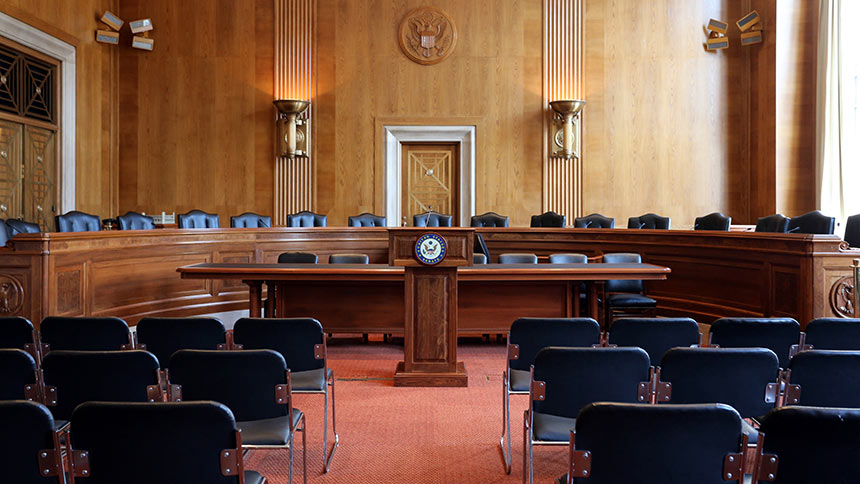
Photo of a United States Senate committee hearing room in Washington, DC on July 18, 2017

Federal SCREEN Act Scheduled for Senate Markup

What Adult Platforms Need to Know The U.S. Senate Committee on Commerce, Science, and Transportation will consider the Shielding Children’s Retinas from Egregious Exposure on the Net Act, commonly known as the SCREEN Act, during an executive session scheduled for August 5, 2026. The bill, S. 737, would establish a federal age-verification mandate for online platforms that regularly make adult content available for profit. The SCREEN Act is only one of several online-safety bills on the committee’s agenda, but it is the proposal with the most direct and immediate significance for the adult entertainment industry. Committee approval would send the…

Read more
AI-generated photo of a sexy woman laying across an arm chair with dark red overlay and white serif type and Silverstein Legal logo

AI-Generated Adult Content: “It’s Synthetic” Is Not a Compliance Strategy

AI-generated adult content may be synthetic, but the compliance risk is real. That point matters for AI adult chat platforms, AI companion products, fantasy-roleplay services, synthetic adult-media generators, text-to-image and text-to-video tools, voice and avatar products, and adult platforms adding generative-AI features. Some platforms assume they are in a safer position because the content is fictional, user-directed, AI-generated, or text-only. Those facts may be relevant, but they are not complete compliance answers. The issue is not simply whether the content is “real.” The issue is whether the platform can show that its rules, disclosures, moderation tools, complaint process, and internal…

Read more
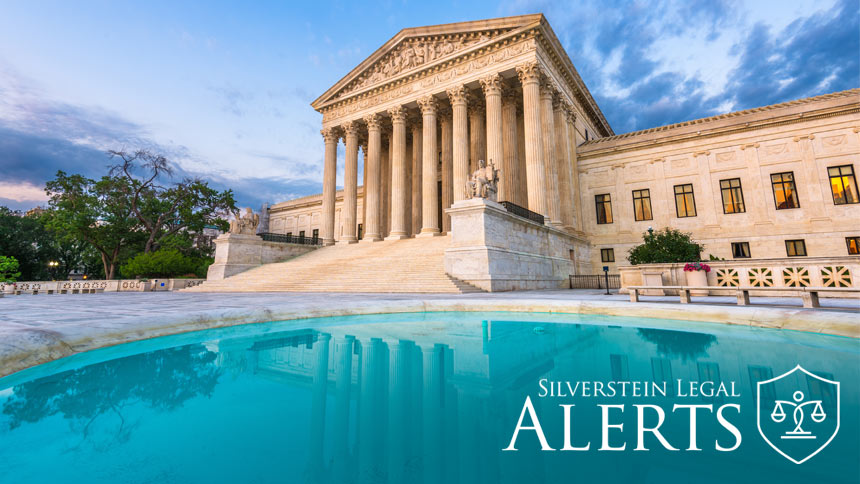
Photo of United States Supreme Court exterior on a sunny day

Supreme Court Allows Texas App Store Age-Verification Law to Remain in Effect

On July 6, 2026, the United States Supreme Court declined to block enforcement of Texas’s App Store Accountability Act, leaving the law in effect while litigation continues. The Supreme Court’s action is not a final ruling on the constitutionality of the law. However, as a practical matter, adult-industry platforms, creator platforms, social platforms, dating apps, marketplace apps, and other mobile-app operators should treat the Texas law as currently enforceable and evaluate whether their app-store distribution, age-assurance, parental-consent, privacy, monetization, and compliance practices need to be updated. What the Texas Law Does The Texas App Store Accountability Act requires covered app…

Read more
Back To Top
Search