
18 U.S. Code §2257, 28 C.F.R. 75 – Record Keeping Requirements
The Child Protection and Obscenity Enforcement Act of 1988 is a United States Act of Congress and part of the…


It criminalizes production and dissemination of technology, devices, or services intended to circumvent measures (commonly known as Digital Rights Management or DRM) that control access to copyrighted works and it also criminalizes the act of circumventing an access control, whether or not there is actual infringement of copyright itself. In addition, the DMCA heightens the penalties for copyright infringement on the Internet. Passed on October 12, 1998 by a unanimous vote in the U.S. Senate and signed into law by President Bill Clinton on October 28, 1998, the DMCA amended Title 17 of the United States Code to extend the reach of copyright, while limiting the liability of the providers of on-line services for copyright infringement by their users.
DMCA Title II, the Online Copyright Infringement Liability Limitation Act (“OCILLA”), creates a safe harbor for online service providers (OSPs, including ISPs) against copyright liability if they adhere to and qualify for certain prescribed safe harbor guidelines and promptly block access to allegedly infringing material (or remove such material from their systems) if they receive a notification claiming infringement from a copyright holder or the copyright holder’s agent. OCILLA also includes a counter-notification provision that offers OSPs a safe harbor from liability to their users, if the material upon notice from such users claiming that the material in question is not, in fact, infringing. OCILLA also provides for subpoenas to OSPs to provide their users’ identity.
Protection of our clients’ intellectual property rights is one of our foremost obligations. Whether you are an internet service provider, host, content producer, or website owner, copyright and trademark theft are rampant in the adult industry given technological advancements allowing electronic content to be misappropriated with ease. We aggressively pursue copyright and trademark infringement claims on behalf of traditional and new media clients. We also assist in perfecting your copyright and submitting applications for trademark protection with governmental entities. Additionally, our firm will vigorously defend any frivolous claim brought against you and utilize all of the defenses made available by the most recent laws.
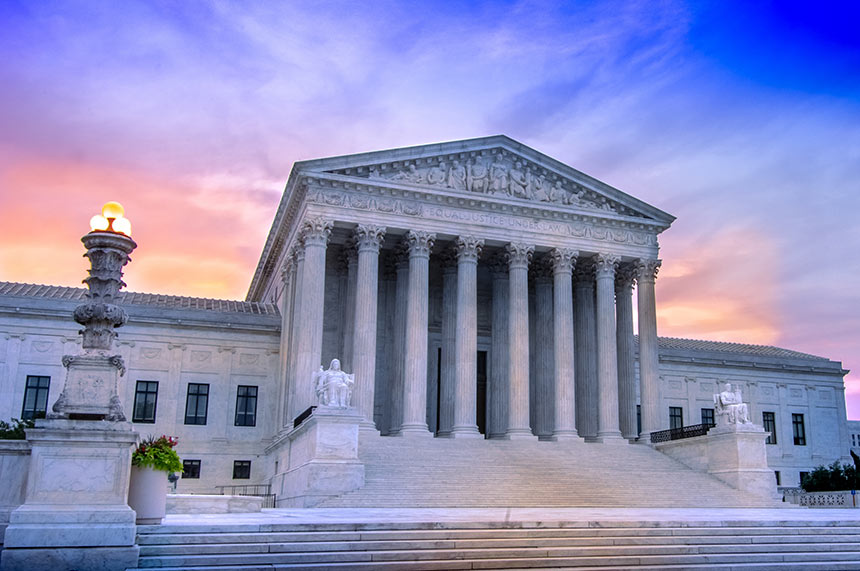
WASHINGTON — The U.S. Supreme Court ruled unanimously last week against music industry record labels in a high-profile content piracy case brought against the country’s third-largest internet service provider (ISP). The ruling has implications that impact content piracy mitigation efforts in creative industries across the board, including adult entertainment. One of the core sentiments in the Supreme Court's ruling is that an ISP cannot be held liable for the actions of a third party. In 2018, rights holders, including Sony Music Entertainment, Universal Music Group, and Warner Music, sued Cox Communications. A lower court handed the music industry a verdict of about $1 billion a year later. But Cox was able to bring the case on appeal all the way to the high court. There, the bench ruled, 9-0, in favor of the ISP because, per Justice Clarence Thomas writing for the court, "a company is not liable as a…

The digital landscape is increasingly being shaped by artificial intelligence, and while AI offers immense potential, it's also being weaponized. A disturbing trend has emerged: AI-powered "DMCA takedown services" are reportedly flooding the internet with thousands of fraudulent Digital Millennium Copyright Act (DMCA) notices. This torrent of fake claims is creating chaos for legitimate copyright owners and online platform operators alike, disrupting businesses, damaging reputations, and undermining the very system designed to protect intellectual property. Featured In The August 2025 Edition Of XBIZ World The Problem: AI-Fueled Falsity These malicious AI services leverage sophisticated algorithms to generate convincing-looking DMCA notices en masse. They often lack genuine claims of infringement, instead relying on: Generic Accusations: Notices with vague descriptions of copyrighted material and minimal supporting evidence. Automated Targeting: AI can rapidly identify and target vast numbers of websites or content, regardless of actual infringement. Exploiting Automation: Many platforms rely on automated…

The European Summit (“TES”) is scheduled for September 13, 2019 – September 16, 2019 and it is now confirmed that for the second consecutive year, adult website attorney Corey D. Silverstein will be in attendance as a sponsor, speaker, and attendee. This year’s TES takes place at the Vienna House Diplomat Conference Hotel located at Evropska 15, Prague, Czech Republic and is being advertised as the conference “where affiliates, media buyers, advertisers & publishers meet”. TES anticipates that this year’s tradeshow will have 3,500 participants, 150 + exhibitors, and 100 + speakers from more than 80 countries. At this year’s TES Prague, adult attorney Corey D. Silverstein will be presenting and participating in various educational seminars created for the benefit of all attendees. The following is the speaking schedule web lawyer Corey D. Silverstein. Additionally, you can find the full TES schedule here. Legal for Newbies – Back to Basics…

On February 21, 2018, Variety.com writer Janko Roettgers authored an amazing article related to the recent outbreak of so-called “Deepfake Videos.” The article, entitled “Porn Producers Offer to Help Hollywood Take Down Deepfake Videos” became an instant splash and has been widely discussed on Variety.com, Twitter, and FaceBook. Premiere adult industry news source XBiz.com was also quick to comment on the story. Adult industry attorney Corey D. Silverstein told Variety that the deepfakes phenomenon is really nothing new to those who’ve followed porn’s backend through the years, and that there’s a workaround for the legal distribution of deepfakes. “It will be a battle,” said adult industry lawyer Corey D. Silverstein, but he argued that the battle could be won. “Fake celebrity porn has been around since the 1990s,” he said. He noted that in the past it used to be more of an issue of photoshopped stills as opposed to…

It’s been a pretty terrible week for supporters of “deepfakes” and technology like FakeApp. After PornHub, Discord and Gytcat banned the videos, Twitter and Reddit have also elected to ban the posting of deepfakes. This is not a surprising development given the massive backlash from celebrities and the media. Adult Industry Lawyer Corey D. Silverstein has been following the developments for quite some time and is pleased to see private businesses taking action before the government would have been pressured to enact swift and potentially overbroad legislation. Don’t think for a second that this is last we have seen of deepfakes; in fact, this is only the beginning. Deepfakes take existing video footage and employ a machine-learning algorithm through technology like FakeApp. The algorithm is able to take the face of a person and paste it onto another body. Celebrities including, Emma Watson, Arianna Grande, Katy Perry and Taylor Swift…
The Child Protection and Obscenity Enforcement Act of 1988 is a United States Act of Congress and part of the…

Age Verification Compliance & Litigation Services At Silverstein Legal, we provide comprehensive legal services focused on age verification compliance for…

Artificial Intelligence Law, Platforms, Content Creation & Compliance Services At Silverstein Legal, we offer cutting-edge legal support for companies, developers,…

Our attorneys have assisted in the creation and growth of businesses across the United States and throughout the world. We…

Unfortunately, when two or more parties cannot resolve their disputes amicably, litigation may be the only remaining option for an…

Section 230 of the Communications Decency Act (“CDA”) is arguably one of the most important laws that all e-commerce operators…

Content Production, Compliance & Legal Protection At Silverstein Legal, we provide specialized legal counsel for professionals and businesses involved in…

Contract law determines when promises are enforceable. A legally enforceable contract typically has an offer, acceptance and consideration. Contracts need…

The thought of being investigated, indicted, charged or accused of any criminal offense can be a miserable experience. Since the…

Our Attorneys were First on the Scene in providing legal advice related to Cryptocurrency. Welcome to the new world of…

As the world-wide-web continues to grow and more individuals and businesses develop online presences, disputes related to domain names has…
If you are an online business operator, legal compliance should be at the top of your list of priorities. Arguably…