

Skip to content
Photo of lady justice holding scales

Eighth Circuit Vacates FTC’s “Click-to-Cancel” Rule — But the Fight Isn’t Over for Negative Option Compliance

On July 8, 2025, just days before enforcement was set to begin, the U.S. Court of Appeals for the Eighth Circuit vacated the Federal Trade Commission’s “Click-to-Cancel” Rule — officially known as the Rule Concerning Subscriptions and Other Negative Option Plans. The court’s decision came in response to consolidated petitions challenging the rule’s scope, legality, and procedural underpinnings. While the rule faced several lines of attack, the Eighth Circuit ruled decisively on procedural grounds, holding that the FTC failed to conduct the required preliminary regulatory analysis after underestimating the rule’s economic impact. Specifically, the FTC initially claimed the rule would impose less than $100 million in annual compliance costs — a critical threshold for determining whether additional economic analysis is required. Even after an administrative law judge later concluded in April 2024 that the rule would exceed that impact, the agency declined to revise its approach or provide the required analysis. This procedural misstep proved fatal. In their dissent from the rule’s final issuance in November 2024, now-Chairman Andrew Ferguson and Commissioner Melissa Holyoak criticized the rulemaking as a “race to cross the finish line” that attempted to apply broad consumer protection mandates to the “entire American economy.” The Eighth…

Read more
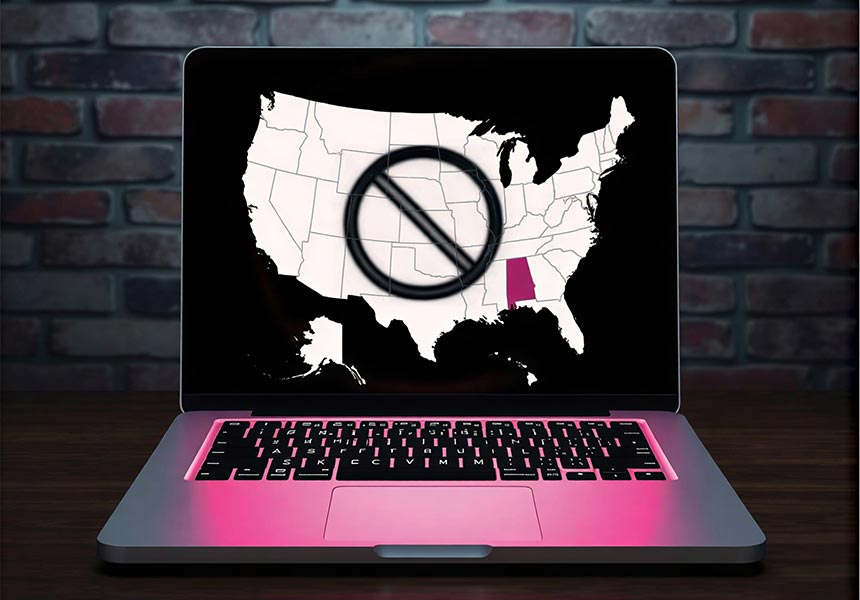
Screenshot of website showing age verification

Arizona Mandates Age Verification for Adult Websites, Raising Privacy and Access Concerns

House Bill 2112 Arizona has officially joined a growing list of states requiring commercial adult websites to implement robust age verification measures, aiming to prevent minors from accessing sexually explicit content. Governor Katie Hobbs signed House Bill 2112 (HB2112) into law on May 13, 2025, a move that has been met with both applause from proponents of child protection and significant concerns from civil liberties advocates and the adult entertainment industry. Featured In The July 2025 Edition Of XBIZ World The new law, sponsored by State Representative Nick Kupper, mandates that websites where more than one-third of the content is "sexual material harmful to minors" must use "reasonable age verification methods" to ensure users are at least 18 years old. These methods can include digital identification or commercial age verification systems. Crucially, the bill specifies that such systems should not retain or transmit any identifying personal information of users to state or federal government entities. Proponents, including Representative Kupper, argue that the law is a necessary step to shield children from harmful online content. "Hardcore pornography has been just one click away from kids for too long, and the companies behind it have looked the other way while cashing in,"…

Read more
US Capitol Building against blue sky with clouds

U.S. Supreme Court Issues Opinion in FSC v. Paxton: Major Implications for Age Verification, Free Speech and State Regulation

Today, the United States Supreme Court issued its long-awaited opinion in Free Speech Coalition v. Paxton, a landmark case addressing the constitutionality of Texas’ age-verification law targeting adult content online. In a closely watched decision, the Court ruled in favor of Texas. Background The case arose from a Texas law requiring all publishers of online adult content to implement stringent age-verification mechanisms to prevent minors from accessing such material. The Free Speech Coalition (FSC), a trade association representing the adult entertainment industry, challenged the law as a violation of free speech rights and a form of compelled disclosure. Lower courts had been divided on the issue, prompting the Supreme Court to grant certiorari to resolve the constitutional questions at stake. The Court’s Ruling In an opinion authored by Justice Clarence Thomas, the Court held that H. B. 1181 triggers, and survives, review under intermediate scrutiny because it only incidentally burdens the protected speech of adults. What’s Next Silverstein Legal is actively analyzing the implications of this decision for our clients operating in the digital content and media industries and the future of age verification in the United States. For more information or to discuss how this ruling may affect your…

Read more
Illustration of a man using mobile devices for identity verification

France’s Bold Move: Navigating the New Age Verification Landscape

France's implementation of its sweeping age verification law for online adult content on April 11, 2025, marks a pivotal moment in the ongoing global debate surrounding online safety and access to adult material. Going beyond a simple requirement, this legislation, driven by the Regulatory Authority for Audiovisual and Digital Communication (ARCOM), aims to establish a robust framework that prioritizes the protection of minors while navigating the complexities of user privacy and industry viability. This article delves deeper into the intricacies of the law, its multifaceted impacts, the technological landscape it necessitates, and the broader implications for the future of online adult entertainment. Featured In The June 2025 Edition Of XBIZ World France/ARCOM Means Business In didn’t take long for ARCOM to show that it means business when it comes to the enforcement of its age verification law. As I was writing this article, on April 22, 2025, ARCOM released a statement indicating that it had already commenced action against the providers of five services that allowed minors to access pornographic content without age verification. XBIZ’s own Rick Louis was quick to cover the news. The Genesis and Nuances of the Legislation The new regulations are not an isolated initiative but…

Read more
European Commission Logo - Dark gray sans-serif type with blue and yellow EU flag

European Commission Opens Formal DSA Investigations into Pornographic Platforms to Safeguard Minors

Key Takeaways Formal Proceedings Initiated: The European Commission has opened formal investigations into Pornhub, Stripchat, XNXX, and XVideos for suspected breaches of the Digital Services Act (DSA), focusing on the lack of effective age verification and child protection measures. Core Allegations: The platforms are suspected of failing to: Implement appropriate and proportionate age verification tools. Assess and mitigate risks related to minors’ access to adult content. Ensure the rights and well-being of children are central to platform design. VLOP Status Change: Stripchat is being de-designated as a Very Large Online Platform (VLOP) after falling below the active user threshold for over a year. However, Stripchat remains subject to general DSA obligations, and enforcement will shift to Cyprus Radiotelevision Authority as its national Digital Services Coordinator. Coordinated Action on Smaller Platforms: In parallel, national authorities across the EU are conducting coordinated enforcement against smaller porn platforms under their jurisdiction, reinforcing a pan-European approach to child protection under the DSA. What Comes Next The Commission will intensify investigations, including further evidence collection, interviews, and possible inspections. It may impose interim measures, non-compliance decisions, or accept binding commitments from platforms. These actions follow the platforms’ 2024 risk assessments and RFI responses, which informed…

Read more
Photo of a man watching porn on his phone

New GOP bill would basically ban porn, experts warn

The Interstate Obscenity Definition Act would rewrite SCOTUS's definition of obscenity. A bill that rewrites the legal definition of "obscenity" could potentially change the internet as we know it. Last week, Republican Utah Sen. Mike Lee and Illinois Rep. Mary Miller reintroduced the Interstate Obscenity Definition Act (IODA), which would redefine what is considered "obscene" material. Obscenity isn't protected by the First Amendment, which enshrines freedom of speech. "It may as well be an outright ban on pornography," adult industry attorney Corey D. Silverstein told Mashable, "because basically, under [Lee's] definition, all adult entertainment, all forms of pornography, will be deemed obscene." Obscenity, porn, and the law Obscenity is "outside the bounds of the First Amendment," explained Mike Stabile, director of public policy at adult industry trade organization, the Free Speech Coalition. "You cannot distribute it, you can't sell it, you can't post it online…it is something you can be prosecuted for." In U.S. law, obscenity is currently determined by the "Miller test," a three-part test introduced after the 1973 Supreme Court case Miller v. California: whether "the average person, applying contemporary community standards" would find that the work, taken as a whole, appeals to the prurient [shameful or morbid…

Read more
Illustration of raised hands with hearts in palms

Why Supporting Adult Entertainment Non-Profits Requires More Than Just Donations

When people think about supporting causes they believe in, donating money is often the first solution that comes to mind. While financial contributions are crucial for keeping non-profits in the adult entertainment industry, such as the Free Speech Coalition (FSC), Association of Sites Advocating Child Protection (ASACP), the Woodhull Freedom Foundation, Pineapple Support, New Moon Network, and Cupcake Girls, operational, there is a deeper level of engagement that is just as essential — volunteering time, advocacy, and community involvement. The adult entertainment industry is one that faces constant legal battles, societal stigma, and workplace challenges, making it even more important for supporters to contribute in ways beyond financial aid. Featured In The May 2025 Edition Of XBIZ World The Role of Adult Entertainment Non-Profits Organizations like the FSC, ASACP, the Woodhull Freedom Foundation, Pineapple Support, New Moon Network and Cupcake Girls work tirelessly to protect the rights of adult performers, producers, and industry workers. Each organization plays a unique and essential role in supporting the community: Free Speech Coalition (FSC) The FSC is a trade organization that fights for the rights of adult industry workers by advocating against censorship, providing legal support, and working on policies that protect performers and…

Read more
US Capitol Building against blue sky with clouds

U.S. Congress Passes the TAKE IT DOWN Act: New Criminal Offenses and Platform Takedown Obligations for Nonconsensual Intimate Imagery (NCII)

On April 28, 2025, the U.S. House of Representatives overwhelmingly passed S. 146, the TAKE IT DOWN Act, following unanimous Senate approval in February. The bill, formally titled Tools to Address Known Exploitation by Immobilizing Technological Deepfakes On Websites and Networks, now heads to President Donald Trump's desk for signature, where it is expected to become law with strong bipartisan support and endorsement from First Lady Melania Trump. This landmark legislation addresses the growing harms posed by both authentic and synthetic nonconsensual intimate images (NCII). It establishes new criminal penalties and imposes civil obligations on online platforms to swiftly remove flagged NCII content. Key Provisions: Criminal Liability Offense: Knowingly publishing authentic or synthetic NCII without consent is now a federal crime. Penalties: Up to two years' imprisonment for publishing NCII of an adult. Up to three years' imprisonment if the NCII depicts a minor under 18. Threats to publish authentic NCII are punished the same as actual publication. Threats to publish synthetic NCII carry reduced penalties (up to 18 months for adults, 30 months for minors). Clarifications: Consent to create an image does not equate to consent to publish it. Prior private sharing does not negate the victim’s right to…

Read more
Photo of a gavel with coral colored lighting in background

US Federal Age Verification on the Horizon – the SCREEN Act

For those of you who have been counting, as of this writing, there are now over 20 different enacted and proposed state laws in the United States requiring age verification for online content, particularly concerning adult entertainment websites. The sheer volume of these laws has been exhausting to the adult entertainment industry. Unfortunately, the adult industry has a new looming potential threat in the form of a United States federal law related to age verification. Featured In The April 2025 Edition Of XBIZ World The Shielding Children's Retinas from Egregious Exposure on the Net (SCREEN) Act, is a legislative proposal introduced by Senator Mike Lee (Republican-Utah) aimed at protecting minors from exposure to online pornographic content. The act mandates that commercial pornographic websites implement robust age verification technologies to ensure that users are not minors, thereby preventing children from accessing harmful material. Much like the state age verification laws that the adult entertainment industry have come to know, the SCREEN Act requires all commercial pornographic websites to adopt age verification technology to ensure a child cannot access its pornographic content. The SCREEN Act Summary Age verification requirements include: Prohibition on simple age attestation (i.e., simply entering in a birthdate); Requires…

Read more
Photo of a gavel with overlaying headshot of Republican New York Assembly Member Brian Maher

New York Assemblyman Proposes Banning the Term ‘Sex Work’

ALBANY, N.Y. — Republican New York Assembly Member Brian Maher has introduced a bill to prohibit the use of the term "sex work" in government documents. The bill, AB 7008, would amend Section 69 of the general construction law to prohibit "the use of the term 'sex work' and certain variations of such term in the law or any rule, regulation or resolution." The variations include "sex worker," "sex-work" and "sex-worker." "I cannot count how many times I have used terms like 'ridiculous,' 'incomprehensible' or 'naive' when describing some of the proposed laws that I have reviewed during my 20-year legal career," said industry attorney Corey D. Silverstein. "I don't remember ever using the word 'stupid,' but that is the only word that comes to mind when reading Mr. Maher's proposed revision to Section 69." Silverstein also told XBIZ that direct challenges to constitutional protections by elected officials should be grounds for removal. "This level of ignorance of the First Amendment and free speech is so outlandish that it warrants expulsion from governance," he said. Mike Stabile, director of public policy for the Free Speech Coalition, noted the timing of the legislation following a recent lobbying effort by New York…

Read more
Back To Top